

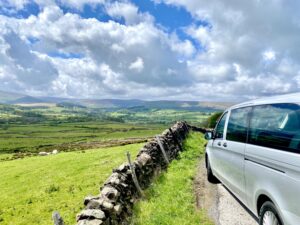
Bowland Foodscape
Hidden in the centre of the kingdom for nearly a thousand years, the Forest of Bowland is a land of wild places and stunning food produce. Here in the hills can be found lonk lamb and wild venison, ideal for hot pots and pies, with bilberries perfect for jams. Along the lower fells graze Holstein Friesian dairy cattle giving the region the finest cheese, ice cream and now, next generation waygu beef.
You can buy a ticket and pop into the wild boar park for a burger or catch salmon and sea trout along the fast flowing rivers of the Ribble & Hodder. Over its moorland the red grouse and pheasants scatter into the heather.
Whilst soaring above, the protected Hen Harrier keep an eye over the AONB and lends its name to Bowland Brewery’s first beer. Amongst all this beauty, are bees, finding honey rich wild flowers. Rich enough for local apiaries to jar golden nectar. Meadow honey to melt your heart.
Ecoescapes
Bowland & Bay food tours is a voyage through these secret lands. This year we joined the ecoescapes project with www.discoverbowland.co.uk. Refresh, recharge and revive with a sustainable short break in the Forest of Bowland AONB read about the Eco Escape itineraries www.ecoescapes.org.uk. Travelling light and treading carefully to discover Lancashire’s wonderous natural environment and the wildlife that makes it their home.
Bowland Meadow Seed
To celebrate this corner of wilderness, I have linked up with the Hay Time Project protecting some of our rarest habitats, upland hay meadows. During spring and summer the diversity of flowers and grasses, becomes a haven for species of birds, bats and insects. The folks have very kindly given Bowland & Bay a sack of seeds from the meadow to share with guests over the winter of 2022/23.
Sowing a mini-meadow helps support pollinators by providing food, shelter and nesting places for bees, wasps, butterflies and other insects. The pack contains seed from one of Bowland’s species-rich meadows.
Instructions
One packet will sow 1m2. In autumn or early spring sow seed into bare soil, having removed stones and weeds. Spread seed evenly and lightly press in before watering. Continue to water as seedlings establish especially during any dry spells. Plants should begin to flower the following May to August.
Allow seeds to fall before cutting plants back in late august. Remove clippings. The meadow area can be mown regularly removing clippings at a height of 8-12cm until the following mid-April, when the meadow area can be left to grow again. Perennial plants in this mix may take a few years to establish.
Meadow Mix – contents will vary but can include:
Autumn hawkbit, bird’s foot trefoil, common knapweed, common cat’s ear, eyebright, meadow buttercup, meadow vetchling, common bent, ribwort plantain, rough hawkbit, selfheal, tufted vetch, yellow-rattle & grasses: sweet vernal, crested dog’s-tail, red fescue, red clover.
2023 Adventure
As 2023 begins, discover the lands on our doorstep and awaken your senses on a Bowland & Bay, artisan foodie adventure. With a packet of seeds, please take a little piece of the centre of the kingdom home. To feed nature, on windowsills and in back gardens, across our small island, on this big blue planet Earth.

